
Loading...
Disable Preloader


Dr. Dhanshree Salunkhe
Book Appointment
Assisted vaginal delivery [Vacuum & Forceps delivery]
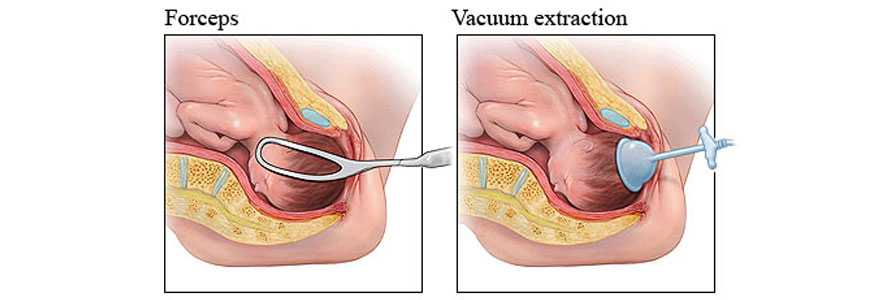
Assisted vaginal delivery refers to the use of medical instruments, such as vacuum extractors or forceps, to aid in the delivery of a baby through the birth canal when a vaginal birth is necessary but requires some assistance. These instruments are typically used in situations where a vaginal delivery is deemed safer than a Caesarean section (C-section), but the mother is having difficulty pushing the baby out or there are other concerns during the birthing process.
Vacuum Extraction (Ventouse):
- Instrument: A vacuum extractor is a soft, cup-like device attached to a vacuum pump and a handle. The cup is placed on the baby's head, and a vacuum is applied to create suction to help guide the baby out of the birth canal.
- Indications: Vacuum extraction may be used when there is prolonged second-stage labor (the pushing stage), maternal exhaustion, or concerns about the baby's heart rate during labor. It's also used when it's essential to expedite the delivery for medical reasons.
- Advantages: Vacuum extraction can assist in a safe and controlled delivery. It's a less invasive method compared to forceps and may reduce the risk of maternal injuries.
Forceps Delivery:
- Instrument: Forceps are metal tongs with curved ends designed to grasp the baby's head gently and guide it through the birth canal. Forceps come in various shapes and sizes, depending on the clinical situation.
- Indications: Forceps delivery is used when there is a need for expedited delivery due to concerns about the baby's well-being, maternal exhaustion, or difficulties in the pushing stage.
- Advantages: Forceps delivery can provide precise control over the baby's position and speed of delivery. It may be preferred in cases where vacuum extraction is not suitable or effective.